Senna

Senna pendula var. glabrata
Senna
Type
Sprawling shrub
Status in NSW
All land managers have a general duty to reduce its spread.

Senna, also called Easter cassia, is one of the most common weeds in the Hastings and a regular target at our working bees. Its bright yellow flowers make it easy to spot, and each plant can drop more than a thousand seeds a year into the bush.

How to identify it

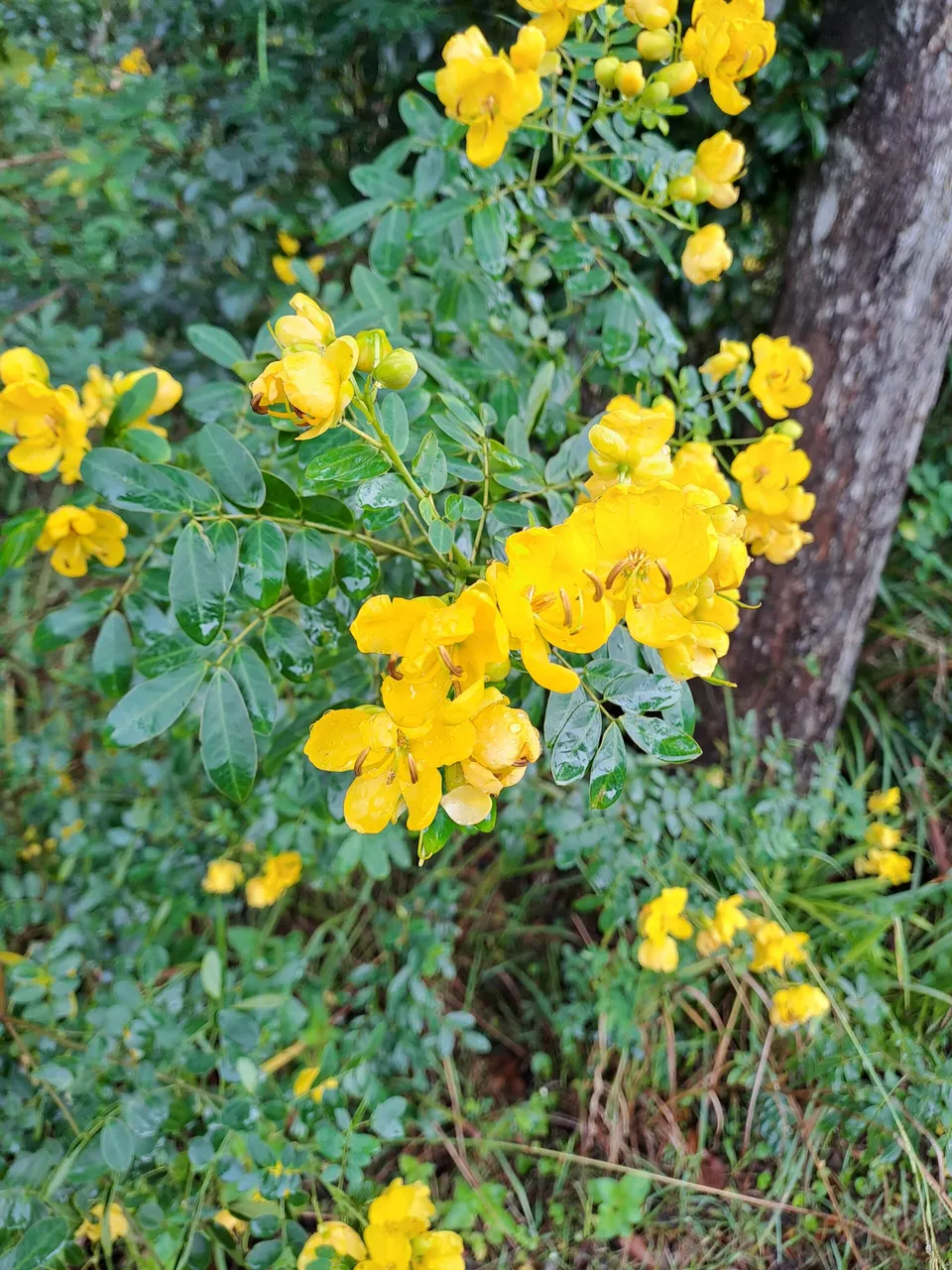
Senna is a shrub usually 2 to 4 metres tall that leans and sprawls over other plants when it is heavy with flowers or pods. Look for:

  • leaves up to 8 cm long made of 3 to 6 pairs of dark green leaflets with rounded tips
  • bright yellow flowers about 3 cm across, in clusters at the branch tips, mostly from late summer into autumn
  • long, hanging, bean-like pods 10 to 20 cm long that turn from green to straw-brown

Several plants look similar. Winter senna, also a weed, has pointed leaflet tips. Two natives look similar too: rainforest cassia (Senna acclinis) and native coffee bush (Breynia oblongifolia), which has single alternate leaves and small round berries. If you are not sure, contact us and we will help you identify it.

Where it grows

Senna comes from Brazil and thrives in our warm, wet coastal climate. It grows in sun or shade and copes with sandy and salty soils. It is common in drainage channels, along roadsides and waterways, in hind dunes and on the edges of bushland and urban reserves. It reshoots from the base after frost or fire.

Why it's a problem

  • It invades bushland, especially on the coast, and crowds out native plants.
  • It reduces food and shelter for native animals.
  • Plants start seeding after 2 to 3 years, and the seed stays alive in the soil for more than 5 years.

How to control it

Combine methods and come back for regrowth and new seedlings. Control plants before they flower and set seed.

  • Hand pull small plants when the soil is damp, taking the roots so they cannot reshoot. A tree popper makes larger seedlings easy.
  • Cut and paint: cut taller plants low and apply a registered herbicide to the stump within 15 seconds.
  • Spot spray seedlings and plants under 2 metres in dense patches while they are actively growing.
  • Mulch the cleared area to slow new seedlings.

Always follow the herbicide label.

Safety and disposal

  • Collect the seed pods before disposing of plants, so you do not spread the seed.
  • Dried pods can be burnt in a hot fire where burning is allowed. Ask the council about other disposal.

Stopping it coming back

  • Never dump garden waste in bushland. It is one of the main ways senna spreads.
  • Check cleared areas for seedlings, which keep coming up for years.
  • Replant with local natives so seedlings have competition.

Join us in our mission to protect and conserve our local environment

By becoming a member, you will support our programs and initiatives to preserve our local environment for future generations.
Make a difference. Join Hastings Landcare today.