- Type
- Prickly shrub
- Status in NSW
- Must not be sold anywhere in NSW. Under a statewide Control Order, new infestations must be reported to the council and destroyed, and plants and seed must not be moved off the land.
Tropical soda apple is a prickly shrub first found in Australia in the upper Macleay in 2010. Cattle eat the fruit and spread the seed in their dung, and it can take over pasture fast. It must be reported: if you think you have found it, contact Port Macquarie-Hastings Council or the NSW Biosecurity Helpline on 1800 680 244.
How to identify it
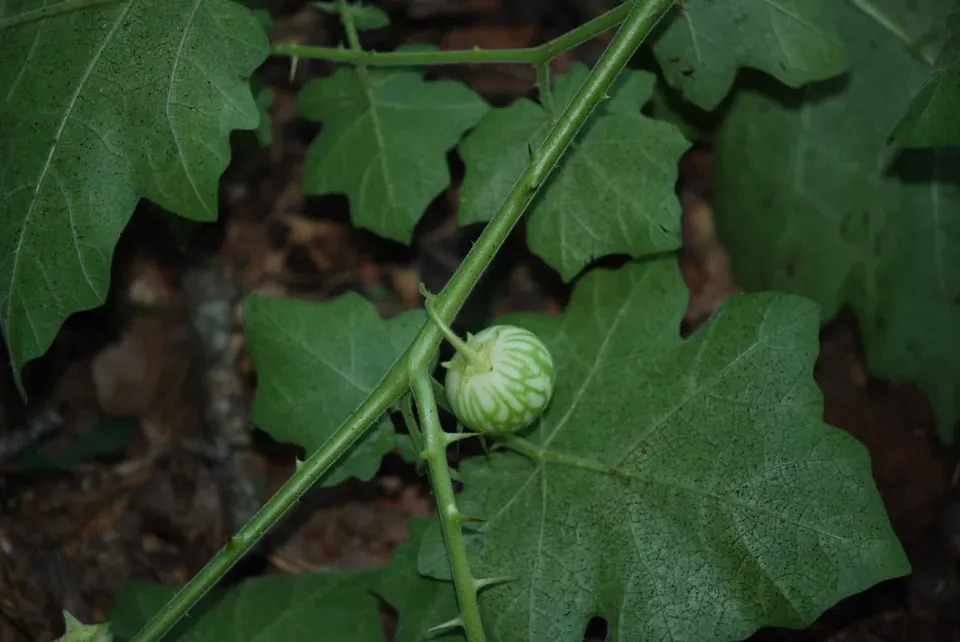
Tropical soda apple is an upright, branching shrub up to 2 metres tall. Look for:
- large, lobed leaves 10 to 20 cm long, velvety, with cream veins and prickles along them
- sharp, cream-coloured prickles up to 12 mm long on the stems and most other parts
- small white star-shaped flowers with petals that curl back, in groups of 3 to 6
- round fruit 2 to 3 cm across that look like tiny watermelons when young (pale green with dark green veins) and turn yellow, like a golf ball, when ripe
Devil's fig and giant devil's fig look similar but grow taller and have shorter prickles and much larger flower clusters. Devil's apple has bright red ripe fruit.
Where it grows
Tropical soda apple grows in pastures, along waterways and floodplains, roadsides, open woodland and forest edges. It likes full sun and grows in most soils. On the North Coast it is established along the Macleay and Clarence rivers, so cattle and floodwater can bring it into the Hastings.
Why it's a problem
- A few plants can take over a hectare of pasture within 6 months.
- Dense thickets stop stock reaching shade and water, and the prickles injure people and animals.
- Each plant can produce up to 45,000 seeds a year.
- It hosts pests and diseases of tomatoes, potatoes and capsicums.
- The fruit can be poisonous to people in large amounts.
How to control it
Contact the council before you start: the wrong control can spread it.
- Pull or dig out small plants, wearing gloves or using pliers.
- Cut large plants close to the ground and treat the stump within 10 seconds.
- Herbicide kills the plant but not the seed, so pick off every fruit by hand first, including small green ones.
- Kill new plants before they are 2 months old, before they fruit, and check treated sites every 2 months.
Always follow the herbicide label.
Safety and disposal
- Wear gloves. The prickles are sharp.
- Burn plants in a hot fire where burning is allowed, and check the site for seedlings afterwards.
- Store any fruit in a closed container away from soil, floodwater, livestock and vermin until it can be destroyed.
- Never move plants, fruit or seed off the property.
Stopping it coming back
- Hold new cattle in a small paddock you can easily inspect for 6 days before letting them onto the rest of the property, as seed passed after 6 days is not viable. Do the same before selling or moving stock.
- Check cattle camps, yards, feed-out areas, creeks and flood debris in spring and summer.
- Buy fodder from clean sources.