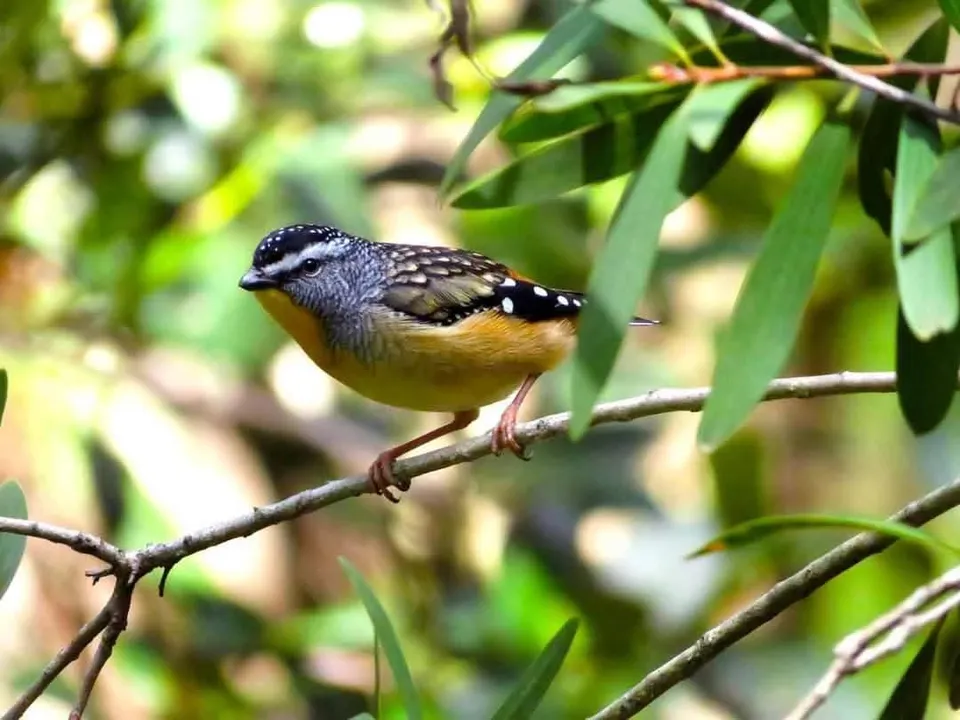
One of the smallest and most colourful birds in Australia, the Spotted Pardalote is a delight to discover in bushland, parks and well-vegetated gardens. Measuring just 8–10 cm long, this tiny native bird is easily recognised by its black head and back covered with neat white spots, bright yellow throat, and distinctive red rump. Although often heard before it is seen, its call is a familiar sound in many eucalypt forests.
We're fortunate to see and hear Spotted Pardalotes at a number of our sites including North Haven Landcare Group, Kooloonbung Creek Nature Park and Sancrox Reserve. Their presence is a wonderful indicator of the healthy native vegetation that our volunteers work hard to protect and restore. Keep an eye out for these tiny birds flitting through the eucalypt canopy or listen for their distinctive call during your next visit.
Spotted Pardalotes play an important role in maintaining healthy ecosystems. They spend much of their time high in the canopy, feeding on tiny insects such as lerps—small sap-sucking insects that live on eucalyptus leaves. By helping to control insect populations, these energetic birds contribute to the health of our native forests.
Unlike many small birds, Spotted Pardalotes usually nest in tunnels they excavate in soft earth banks, creek edges, road cuttings or occasionally in suitable cavities. At the end of the tunnel, they construct a cosy nest lined with bark strips, leaves and grasses. During spring and summer, both parents share the duties of incubating the eggs and feeding the chicks.
Although still common across much of eastern and southern Australia, Spotted Pardalotes rely on healthy native vegetation for food and nesting habitat. The loss of mature eucalypts, removal of understorey vegetation, and habitat fragmentation can reduce the quality of their habitat. Protecting and restoring native bushland helps ensure these birds continue to thrive.
The regular sightings are a reminder of the importance of conserving and restoring local bushland. Every planting day, weed control activity and habitat restoration project helps create a healthier environment for these delightful birds and many other native species. Next time you're walking in local bushland, pause for a moment and listen for the clear, repetitive call coming from high in the treetops. With a little patience, you may be rewarded with a glimpse of one of Australia's smallest and most remarkable native birds—the charming Spotted Pardalote.
Sign up the Hastings Landcare HATCH Newsletter for Landcare updates, resources, grants, informative articles and more!